

How to Label Textile Products for USA: Legal Requirements and Practical Tips
- Legislation
- Compliance
Learn how to care-label textile products for the U.S. market in compliance with FTC regulations and ASTM D5489 standards. This guide provides essential textile labeling compliance tips to help businesses make a correct care-label for their products, stay compliant and avoid consequences for the company.
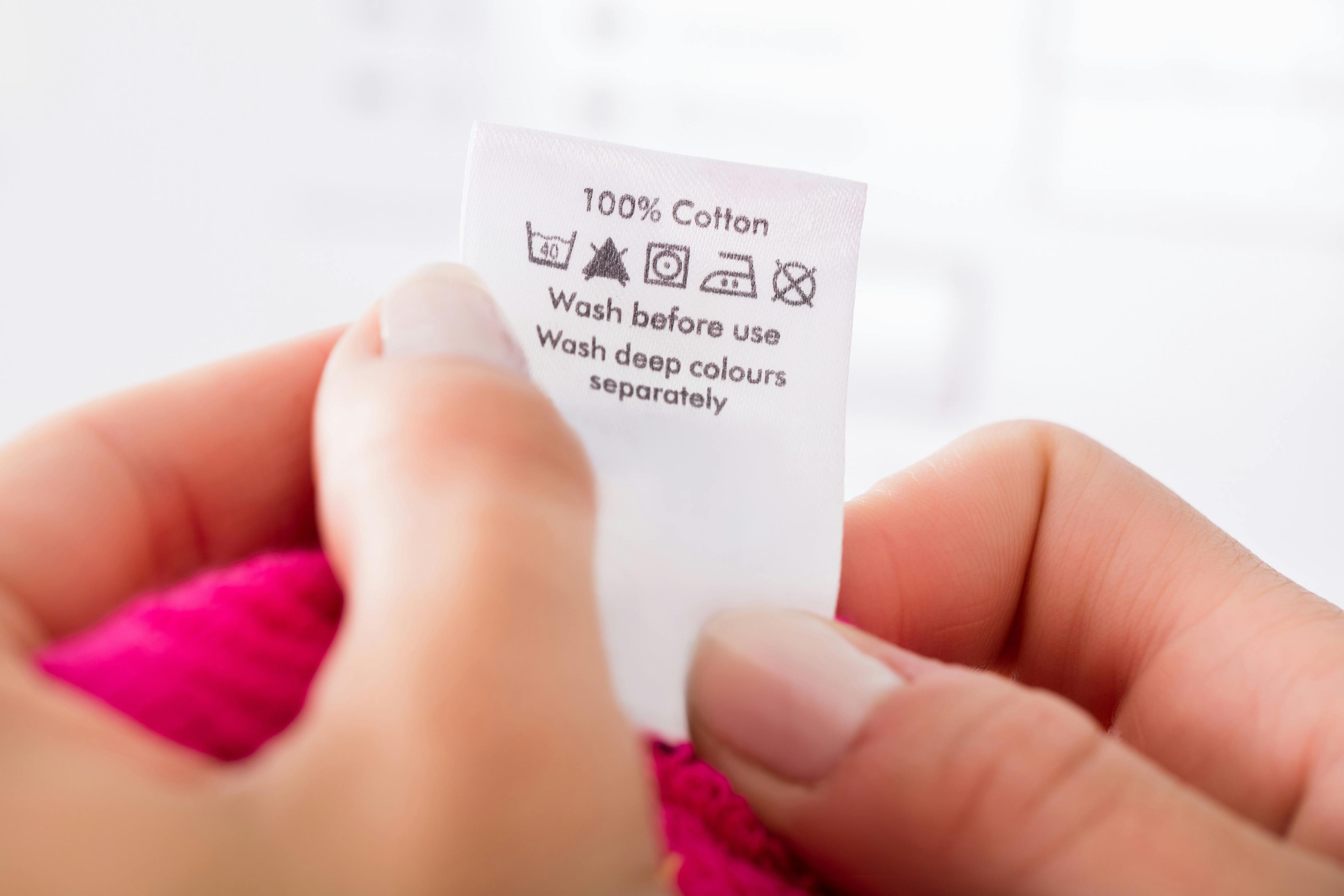
To manufacture and distribute textile products, it is necessary to comply with certain legal requirements. In this article, you will learn what the law states in relation to care-labels.
Thousands of companies are fined and face unnecessary costs due to labeling errors on their products. Before we discuss how to correctly label textile products, we first need to understand what a textile product is.
What is a textile product?
A textile product is any item made from fibers, yarns, or fabrics that undergo processes such as weaving, knitting, or felting to create a finished material. These products can be clothing, home textiles, industrial textiles, or accessories.
By law, textile products must be properly labeled in compliance with each country's regulations. This often creates uncertainty and challenges for companies unsure whether their products meet the required standards. In the United States, businesses must adhere to FTC’s - Federal Trade Commission - and ASTM D5489 regulamentation.
It is important to note that labels can be sewn, stamped, or printed, as long as they are permanently affixed throughout the product’s lifespan. The regulations cover the following key aspects: Responsible Companies’ name and Registered Number, Country of origin, Composition, Care instructions and Size/Dimension. Let’s go into more detail!
Registered Number
One of the mandatory details is the RN, along with the brand name/trade name or the business name/fantasy name without abbreviations (unless officially registered). This not only ensures transparency about the product’s origin but also helps consumers identify the manufacturer.
If the product is intended for export, the tax identification must comply with the registration requirements of the destination country.
Product Size
Indicating the size or dimensions of the product is mandatory. Since there are no strict rules in the official regulations about how this should be displayed, the size can be shown in different ways: numbers, letters, or as one size fits all.
Country of Origin
The country of origin is also a mandatory piece of information and must be stated correctly, according to the country of the manufacturer. It must contain the prefix “Made in”, “Manufactured in” or “Product of”.
Product Composition
The composition of the product is a key part of textile labeling. The complete list of acceptable fiber names is found in the Textile Fiber Products Identification Act. You can check the full list here.
It's important to note that certain components, such as trims, edges, serging, buttons, and others, are not considered part of the composition and do not need to be included on the label.
Why is composition important?
Understanding fabric composition not only provides valuable information to consumers about texture and required care but can also influence purchasing decisions based on personal preferences, such as sustainability or comfort.
Care Instructions
The care symbols for textile products are mandatory and must follow the ISO 3758 standard. Care instructions are divided into five categories, which must be listed in the following order:
Washing
- Indicates the appropriate temperature and washing intensity.
- Specifies if the item should be hand-washed, dry cleaned, or not washed at all.
Bleaching
- Symbols determine if bleaching is allowed and, if so, which type of bleach should be used.
Drying
- Symbols indicate if the item should be machine-dried, air-dried, dried vertically, dried in the shade, or with drip-drying, among other specifications.
Ironing
- Symbols indicate whether ironing is allowed and, if so, the maximum temperature and whether steam ironing is permitted.
Professional Textile Care
- Symbols indicate the type of professional cleaning allowed, whether dry cleaning or wet cleaning.
For a detailed guide on textile care symbols, you can check the ASTM D5489-18 norm, the Standard Guide for Care Symbols for Care Instructions on Textile Products
Why Proper Textile Labeling Matters
Accurate textile labeling not only protects your company from potential fines and other consequences but also plays a crucial role in informing consumers on how to properly care for their garments.
Now that you understand the importance of proper labeling, it’s clear that investing in this process is not just a legal obligation — it’s a key step toward a better and longer-lasting shopping experience.
💡 LabelPRO makes this process easier and more efficient! Contact us today and book a free demo!
Did you like it? Share!