

Why Are Care Labels Important?
- Compliance
- Traceability
- Sustainability
Care labels on clothing may bother some and get ripped right after a purchase, but they are a valuable piece of information. Read this article to find out why care labels are important.
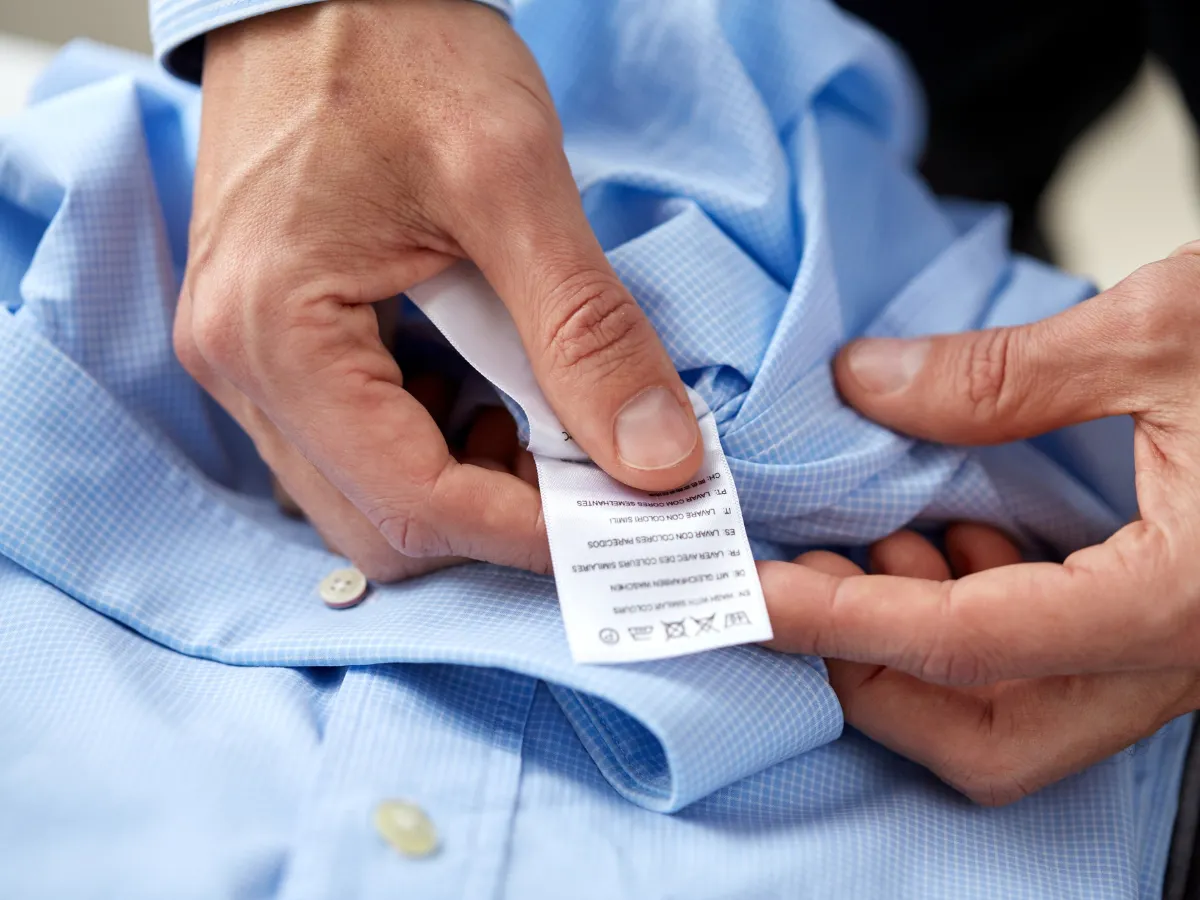
If you’re the type of person that rips off the care label from recently purchased clothing, you should probably pay a little more attention to them because they aren’t just hanging there for no reason.
For both consumers and producers, care labels are a very important piece of material that contain lots of information about the article you’re buying, whether it’s a piece of clothing or a household item made of textile. Know the importance of care labels in this article.
Our clothes are more international than ever
Nowadays, our clothes have become more international than ever. Not only may the apparel goods we shop for online come from different countries, but the very ones being sold on a retail next door do have a complex textile supply chain that circulates the entire world.
In the last 20 years, the international trade of textiles and apparel has doubled, including importation and exportation rates, reaching a value of more than 900 billion dollars in 2022, according to the ITC.
Consequently, the level of information surrounding our apparel and its supply chain is so huge that the care labels serve as the only medium to provide the consumers with the most important data.
Care labels are our clothes’ IDs
Each care label holds very precious information about its piece of apparel. For retailers, they’re important for compliance and transparency reasons, providing all the information required to avoid any kind of penalties, but also stating that the company cares about being ethical to its customers.
The retailers may even personalize their care labels to match the brand’s identity, using them as a tool of branding. Of course, it is required that the care labels contain all the information needed according to the country where the products are being sold.
But when it comes to the consumers, they are even more important. It’s through a care label that a consumer is allowed to see all the essential information to know about a piece of clothing, just like an ID.
Whether they need to consult any information related to the clothing or not, care labels must contain the name of the manufacturer or distributor so that it is registered who is responsible for the clothing. Some care labels even have QR codes that trace all the processes of the chain before it gets into the consumer’s hands.
Care labels can change a customer's decision
Some customers have a preference for some fabrics than others. They may prefer natural fibers over synthetic ones, polyamide rather than polyester for activewear, or even mono-material compositions for sustainability reasons.
Therefore, when a customer with specific composition’s preferences goes shopping for their new piece of clothing, the fiber content information displayed on the care label might be crucial for their decision of which product to buy.
This commonly happens within the luxury industry, where the quality of the garment is a primordial aspect that customers expect when they buy luxury goods. So, when a customer from the luxury market goes shopping after a satin top or dress, they expect to find a “All Silk” fiber content information on the care label, and if it says “Polyester” or “Rayon”, they might not be leaving the store with the product.
Household linen are such a case as well, especially when it comes to sheets and other bedding items. The thread count of a sheet or a pillowcase might be the definitive feature of bedding items to point out its quality, but to define whether it’s a good product or not, knowing its composition is a key factor. So, if you see a bed sheet that says: “300 thread count”, don’t go on thinking it’s a good quality product already! Check its composition to see if it’s made from cotton (a breathable fabric) and not a synthetic fiber, like polyester.
Besides the fiber content information, a customer may change his decision of buying a product based on the care instructions. If the care instructions for a piece of clothing are complex, or if they don’t allow for specific types of cleaning and/or drying, that can change the customer's decision of buying the product. If the product has many restrictions regarding care instructions, that may affect its lifespan and cause trouble for the consumer.
Other trivial information can change the customer's decision of buying a product as well, like the size of a pair of jeans or a top. This type of information will eventually change the decision of a customer, but for different reasons than personal taste.
Smarter labels are good for the environment
One trend in the labeling segment, not only for care labels but for all consuming goods out there, is the implementation of traceable information into scannable technologies, being accessible for both retailers and consumers. Traceability of the product’s chain has become one of the most important practices in the fashion industry, and the transparency of this information is just as important.
Many brands around the world have already adopted this technology and are implementing scannable devices into the care labels, like the QR codes mentioned earlier. These technologies follow the Due Diligence and Ecodesign for Sustainable Products legislation approved by the EU in the past few years, requiring products commercialized in the trade bloc to have a blockchain traceable technology that can be easily accessed by producers and consumers, containing all the information of the production chain.
Displaying traceable information through a care label is a good step towards a more sustainable future, since it’s possible to know where the clothing was produced, with which materials from which manufacturers, etc. This type of information wasn’t announced before, but now it’s becoming obligatory, and just like the other cases you’ve read earlier, it might change the customer’s decision of buying a new piece of clothing.
Label Pro knows care labels' importance
Care labels are crucial for the commercialization of apparel goods, household linen, and other textile products that are out there, and after knowing their importance for both consumers and retailers, you might not want to rip off the care label of your piece of clothing anymore.
For retailers, it may be confusing sometimes knowing if the care labels are complying with the legal requirements or not, that includes typing correctly the information, not forgetting any mandatory data, having its typography and dimensions according to the legislation, etc.
But don’t worry! Label Pro knows how these issues can affect one’s profitability, and our smart platform is here to help. With Label Pro, you create care labels automatically and in compliance with the local legislation, wherever you’re located (just consult where our service is provided). This way, you’ll never worry again about misspellings, forgetting important information or typing wrong things.
Get in touch with us now and request a free demo!
Did you like it? Share!